Finding the right chair when you’re taller than average can be a surprisingly difficult task. Standard furniture is often designed with average heights in mind, leaving those with longer legs and torsos feeling uncomfortable, unsupported, and even experiencing back pain. This isn't just a matter of comfort; proper ergonomic support is crucial for long-term health and productivity. This guide explores the world of chairs for tall people, offering insights into what to look for and why it matters.
The need for specialized seating extends beyond individual comfort. As the global population continues to grow and average heights subtly increase in some regions, the demand for appropriately sized furniture is also rising. This has implications for workplaces, educational institutions, and even home furnishings. Ignoring the ergonomic needs of taller individuals can lead to decreased well-being, reduced performance, and increased healthcare costs.
Understanding the nuances of chairs for tall people empowers consumers to make informed decisions, leading to better posture, reduced strain, and an overall improvement in quality of life. Investing in a chair designed for your specific body type isn't a luxury; it's an investment in your health and well-being.
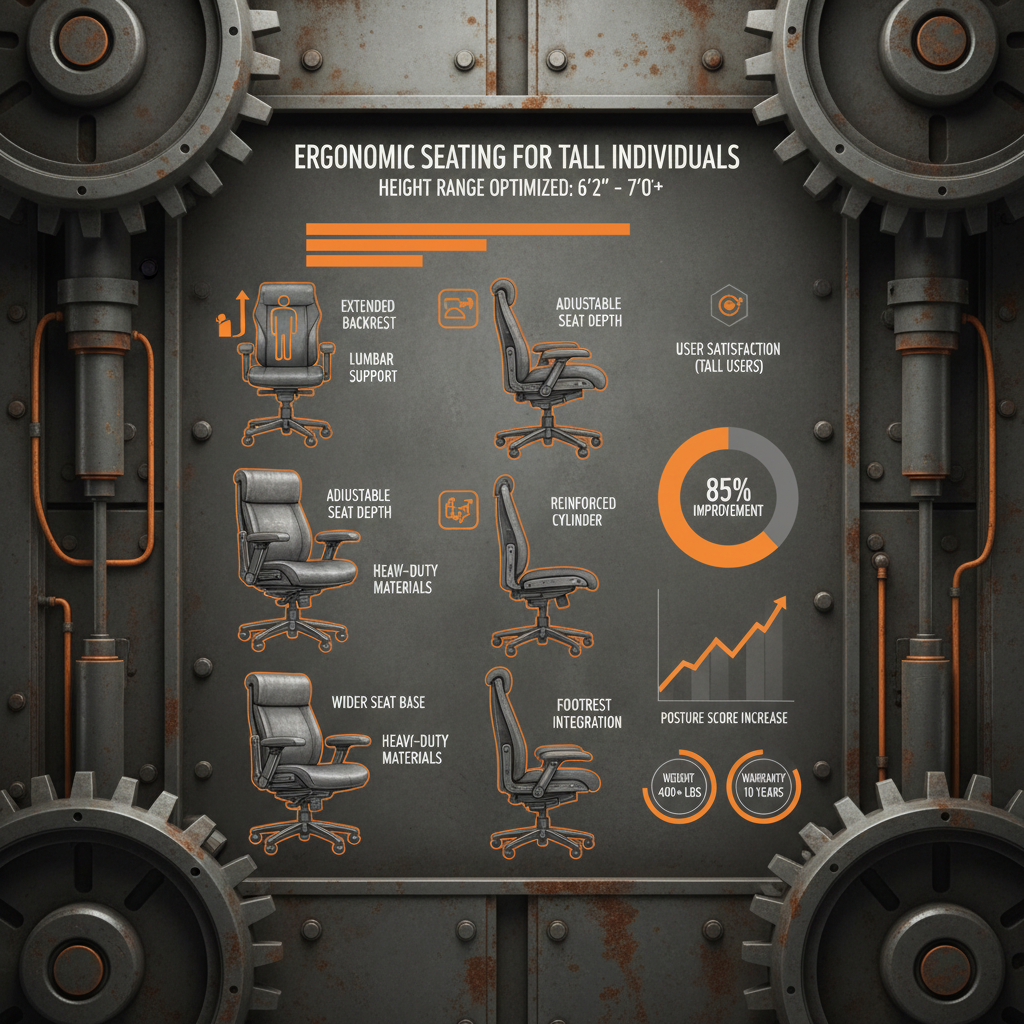
For individuals exceeding average height, a standard chair often results in compromised posture, leading to discomfort and potential long-term health issues. A properly designed chair for tall people prioritizes lumbar support, ensuring the natural curvature of the spine is maintained.
Beyond spinal health, ergonomic design plays a vital role in preventing leg and hip discomfort. Chairs designed for taller individuals offer deeper seats and adjustable heights, minimizing pressure points and promoting healthy circulation. This contributes to increased productivity and a more comfortable overall experience.
The primary difference lies in the dimensions. Chairs for tall people boast increased seat height, seat depth, and backrest height to provide adequate support for longer limbs and torsos. Standard chairs often leave taller individuals feeling cramped and unsupported, leading to discomfort and potential health issues. The adjustability range is also typically greater in chairs designed for taller users, allowing for a truly customized fit.
A good rule of thumb is to sit with your feet flat on the floor and your knees bent at a 90-degree angle. Your thighs should be parallel to the floor. For taller individuals, this often requires a chair with a higher seat height range than standard chairs offer. Measure your inseam (the distance from your crotch to the floor) as a starting point, and then look for chairs with a corresponding seat height adjustment range.
Not necessarily. While a higher price tag can sometimes indicate higher quality materials and construction, it doesn't guarantee a good fit. Focus on the features that matter most – adjustability, lumbar support, and overall dimensions. A mid-range chair with the right specifications can be far more comfortable and supportive than a high-end chair that isn't designed for your body type.
Lumbar support is crucial for maintaining the natural curve of your spine and preventing lower back pain. Taller individuals often require more substantial lumbar support to adequately fill the space between their lower back and the chair. Adjustable lumbar support allows you to customize the level of support to your specific needs.
Yes, definitely. Adjustable armrests allow you to support your arms and shoulders in a comfortable and ergonomic position, reducing strain and preventing fatigue. For taller individuals, it's important that the armrests can be adjusted to a height that supports your arms without causing you to hunch your shoulders.
Look for chairs with a sturdy steel frame and a high-density foam seat cushion. Mesh backing can provide excellent breathability, while leather or durable fabric upholstery can offer increased comfort and longevity. Reinforced base and casters are also essential for supporting heavier weights and ensuring smooth mobility.
In conclusion, investing in chairs for tall people isn’t merely about finding a larger seat; it’s about prioritizing health, comfort, and productivity. By understanding the key features – adjustability, lumbar support, seat depth, and overall dimensions – taller individuals can make informed decisions and select chairs that truly support their unique needs. Proper ergonomic support is a long-term investment in well-being.
As technology and materials science continue to advance, we can expect even more innovative and comfortable seating solutions for those who require them. Don’t settle for discomfort. Visit our website at CD Gaming Furniture today to explore our wide range of chairs designed specifically for tall people and discover the difference a truly supportive chair can make.

If you are interested in our products, you can choose to leave your information here, and we will be in touch with you shortly.